








Introduction
When purchasing a new pair of glasses, most people focus on appearance first. Color, shape, and brand often influence buying decisions more than technical quality. However, understanding how to choose the best eyewear is just as important as finding a style you like.
High-quality eyewear should provide durability, comfort, visual performance, and long-term reliability. A frame that looks attractive in the store may become uncomfortable after a few weeks if it is poorly manufactured. Likewise, a pair of glasses made from superior materials and precise craftsmanship can remain comfortable and attractive for many years.
For consumers, understanding how to evaluate eyewear quality is an important skill. Whether you are buying prescription glasses, sunglasses, or premium fashion frames, knowing what to inspect can help you avoid low-quality products and make a smarter investment.
This guide explains the most important factors professionals use when assessing eyewear quality, including materials, construction, surface finishing, lenses, durability, and wearing comfort.
Why Quality Matters in Eyewear
A pair of glasses is often worn for eight to sixteen hours every day. Unlike many accessories, eyewear remains in constant contact with the face and directly affects visual performance.
Poor-quality frames may develop problems such as:
- Loose hinges
- Peeling coatings
- Frame deformation
- Skin irritation
- Frequent breakage
- Poor lens alignment
In contrast, a well-manufactured frame offers stability, comfort, and consistent performance throughout its lifespan.
The goal of evaluating quality is not necessarily to purchase the most expensive product, but rather to identify eyewear that provides the best combination of craftsmanship, materials, and functionality.
Examine the Frame Construction
One of the first indicators of quality is the overall construction of the frame.
Pick up the glasses and carefully inspect the connections between different components. The frame should feel solid without appearing overly heavy.
The left and right sides should be symmetrical, and the frame should sit evenly on a flat surface. If one temple is higher than the other or the frame appears twisted, it may indicate poor manufacturing or inadequate quality control.
Premium eyewear manufacturers typically maintain tighter tolerances during production, resulting in better alignment and consistency.
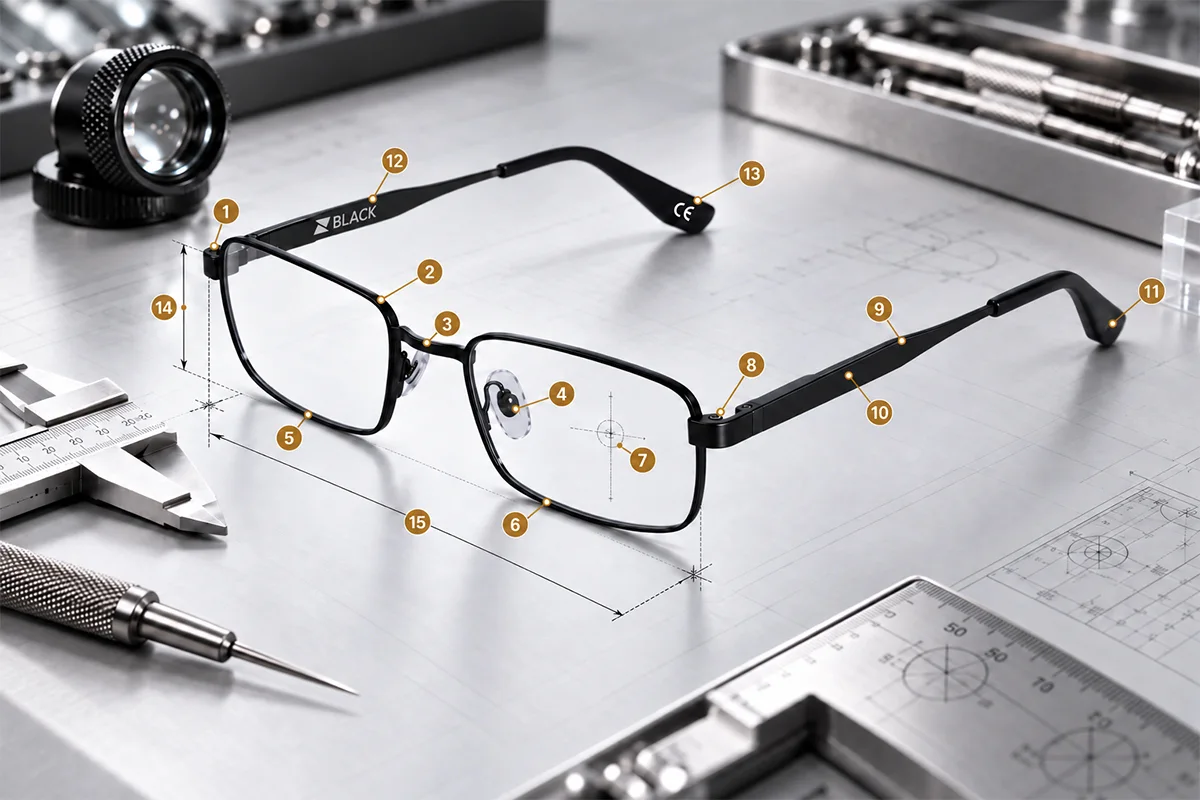
Inspect Welded Areas on Metal Frames
For metal, stainless steel, and titanium eyewear, welding quality is extremely important.
Many consumers overlook welding points, yet these areas often reveal the overall manufacturing standard of the frame.
Uniform Weld Appearance
Quality welds should appear smooth and consistent. Uneven joints, rough edges, or irregular shapes often indicate poor workmanship.
A skilled technician creates connections that blend naturally with the surrounding metal.
Absence of Excess Material
Low-quality welding frequently leaves visible excess solder or metal deposits around the joint.
These imperfections may not only affect appearance but can also indicate inconsistent production standards.
Structural Integrity
Strong welding contributes to long-term durability.
The connection between the bridge, end pieces, and temples should feel secure and stable without any movement or looseness.
Premium manufacturers often perform stress testing during production to ensure welded areas can withstand years of daily use.
Evaluate the Quality of Frame Materials
The material used in a frame significantly influences its durability, comfort, and appearance.
Acetate Frames
High-quality acetate frames typically display rich color depth, smooth polishing, and consistent texture throughout the material.
Unlike low-cost plastic frames, premium acetate allows for better finishing and greater durability.
When examining acetate frames, pay attention to:
- Smooth edges
- Consistent color distribution
- Deep surface polish
- Precise lens groove finishing
A well-made acetate frame should feel substantial without appearing cheap or brittle.
Titanium Frames
Titanium is widely considered one of the highest-quality materials in eyewear manufacturing.
Its advantages include:
- Lightweight construction
- Corrosion resistance
- Hypoallergenic properties
- Excellent strength-to-weight ratio
A quality titanium frame should feel remarkably light while maintaining rigidity and structural stability.
Stainless Steel Frames
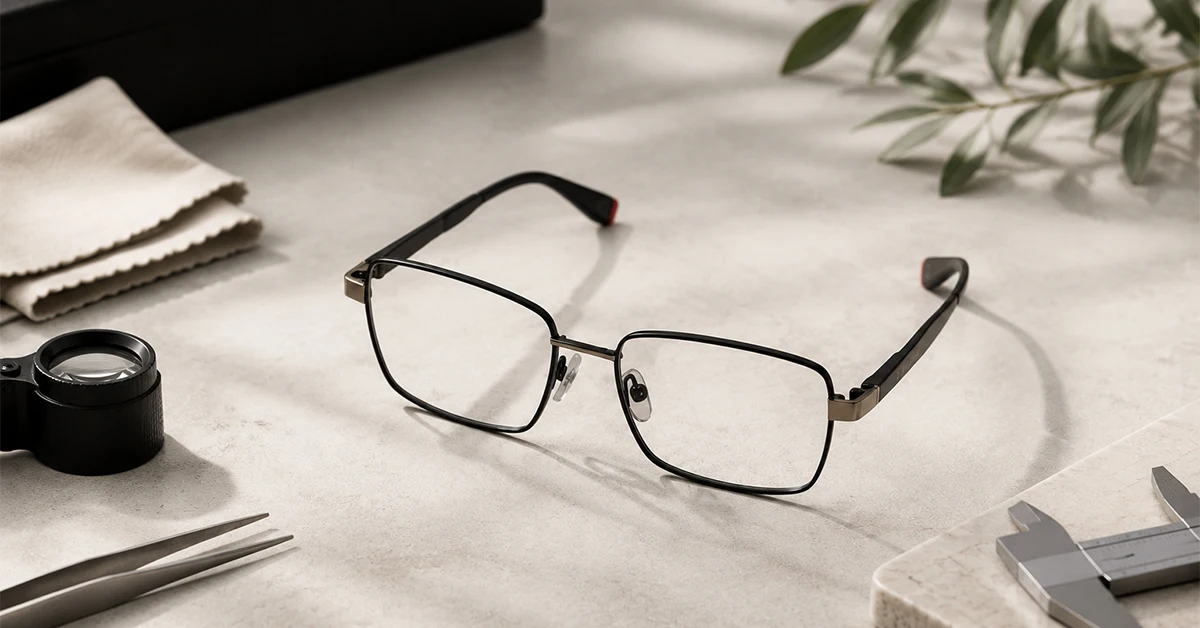
Stainless steel offers excellent durability and value.
Quality stainless steel frames should have:
- Smooth finishing
- Consistent coloring
- Strong hinges
- Uniform coating quality
The frame should feel sturdy without excessive flexing or instability.
Assess Surface Finishing and Coatings
Surface finishing plays an important role in both appearance and durability.
Whether the frame is metal or acetate, the finish should appear uniform and carefully applied.
Metal Coatings
For plated or coated metal frames, examine the surface under good lighting.
Look for:
- Consistent color
- Uniform gloss
- Smooth transitions
- No visible bubbles
- No peeling edges
High-quality plating should appear integrated into the frame rather than sitting on top of the surface.
Poor coatings may fade, chip, or corrode after extended use.
Acetate Polishing
The polishing quality of acetate frames often separates premium products from lower-cost alternatives.
Well-polished acetate reflects light evenly and feels smooth to the touch.
Sharp edges, rough surfaces, or dull finishing usually indicate lower production standards.
Check the Hinge System
The hinge is one of the most frequently used components of a pair of glasses.
Every time glasses are put on or removed, the hinges experience stress.
Quality hinges should:
- Open smoothly
- Close evenly
- Remain firm without stiffness
- Show no lateral movement
Spring hinges should provide controlled flexibility without feeling loose.
Loose hinges can affect frame stability and shorten product lifespan.
Evaluate Lens Quality
Even the finest frame cannot compensate for poor lenses.
Lens quality directly affects visual comfort, optical clarity, and eye health.
Optical Clarity
Look through the lens and observe straight lines in the environment.
Distortion, waviness, or visual irregularities may indicate lower optical quality.
A premium lens should provide clear and natural vision across the entire viewing area.
Surface Quality
Inspect the lens under bright light.
Check for:
- Scratches
- Dust trapped within coatings
- Surface defects
- Manufacturing marks
Quality control should eliminate visible imperfections before lenses reach consumers.
Lens Coatings
Modern lenses often include protective coatings.
The most valuable coatings include:
- Anti-reflective coating
- UV protection
- Scratch resistance
- Water-repellent coating
- Oil-resistant coating
These features improve both durability and visual performance.
Consider Weight and Balance
Many people assume lighter glasses are always better. In reality, balance is more important than weight alone.
A properly balanced frame distributes pressure evenly across the nose and ears.
Poorly balanced glasses may cause:
- Nose discomfort
- Ear fatigue
- Pressure marks
- Frequent slipping
When trying on a frame, wear it for several minutes rather than making an immediate judgment.
Comfort issues often become apparent only after extended wear.
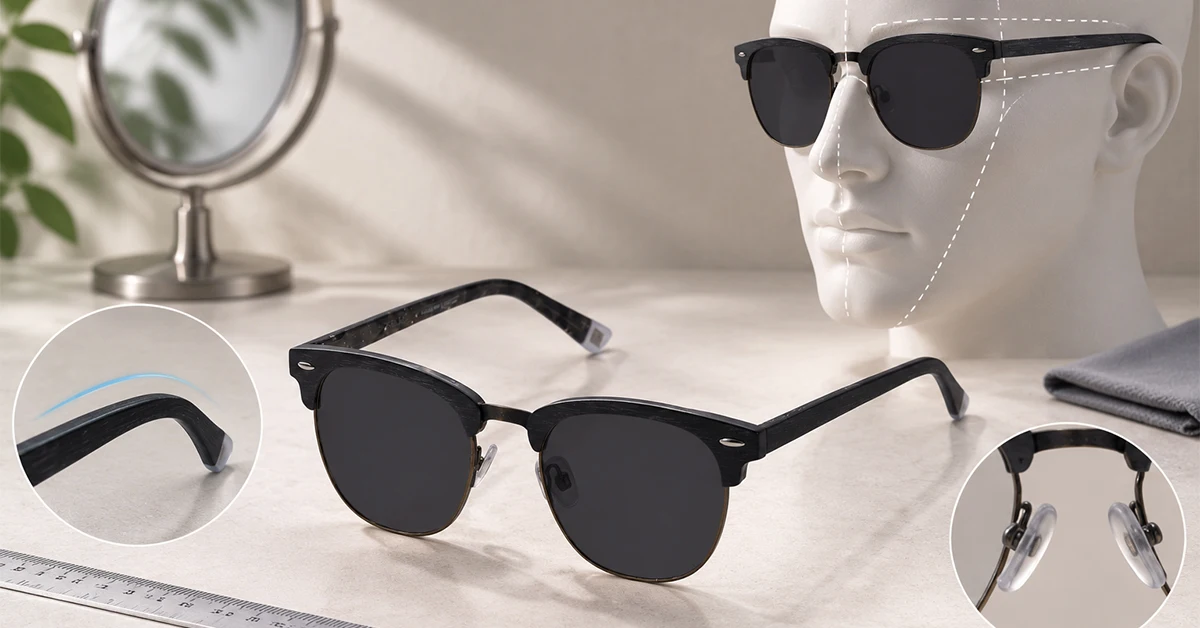
Evaluate Nose Pad Design
Nose pads contribute significantly to comfort.
Quality nose pads should:
- Distribute weight evenly
- Prevent slipping
- Adapt to facial structure
- Avoid excessive pressure
For metal frames, adjustable nose pads offer additional customization.
Premium silicone nose pads often provide greater comfort than harder plastic alternatives.
Check Frame Fit and Ergonomics
A quality frame is designed around human anatomy.
When trying on glasses, ask yourself:
- Are the lenses centered in front of my eyes?
- Do the temples rest comfortably behind my ears?
- Does the frame stay in position while moving?
- Is there excessive pressure anywhere?
Even expensive eyewear can feel uncomfortable if the fit is incorrect.
Proper ergonomics should always take priority over fashion trends.
Test Durability
While consumers should never intentionally damage eyewear during shopping, there are subtle ways to assess durability.
Quality frames generally feel:
- Solid
- Well-balanced
- Precisely assembled
- Free from rattling components
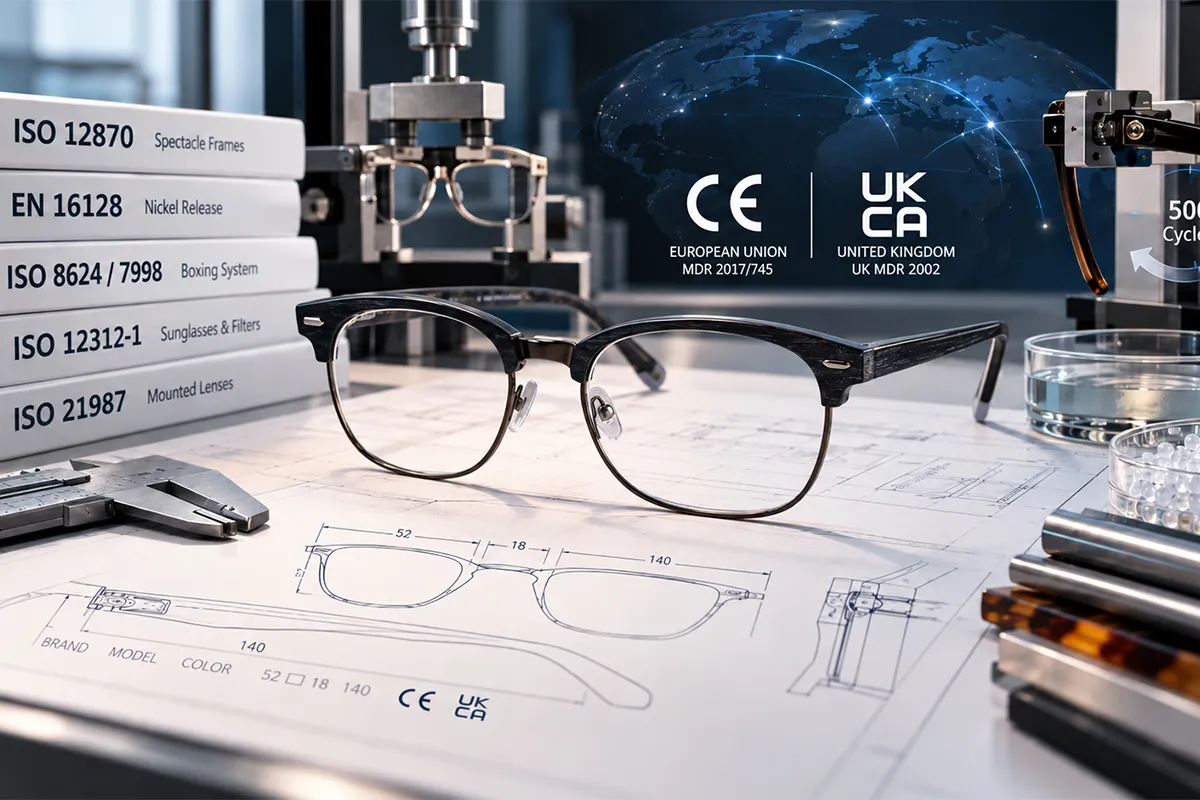
Premium eyewear manufacturers invest heavily in testing procedures that simulate years of use, including hinge cycling, coating durability, and environmental resistance.
These quality-control measures often separate professional-grade eyewear from low-cost alternatives.
Brand Reputation and Manufacturing Standards
Brand reputation alone does not guarantee quality, but established manufacturers typically maintain higher production standards.
Reliable brands often provide:
- Better materials
- Stronger quality control
- Consistent manufacturing
- Warranty support
- Replacement parts availability
Consumers should evaluate both the physical product and the manufacturer’s reputation before making a purchase.
The Ultimate Quality Checklist
Before purchasing a pair of glasses, consider the following checklist:
✓ Frame alignment is symmetrical
✓ Welds and joints are clean and strong
✓ Materials feel durable and well-finished
✓ Surface coatings are uniform
✓ Hinges operate smoothly
✓ Lenses provide clear, distortion-free vision
✓ Weight is balanced and comfortable
✓ Nose pads fit properly
✓ Frame dimensions match your face
✓ The style suits your personal preferences
Conclusion
Determining the quality of eyewear involves much more than examining its appearance. High-quality glasses combine superior materials, precise manufacturing, durable finishes, reliable lenses, and long-term comfort.
By learning how to evaluate construction quality, material selection, lens performance, and fit, consumers can make more confident purchasing decisions and avoid common problems associated with low-quality eyewear.
Ultimately, the best pair of glasses is one that not only looks attractive but also delivers comfort, durability, and reliable performance every day. While quality should always be your top priority, understanding how to choose sunglasses for your face shape can help you find eyewear that complements your features while providing lasting comfort and performance. Investing time in evaluating quality before purchasing can lead to a significantly better eyewear experience for years to come.