





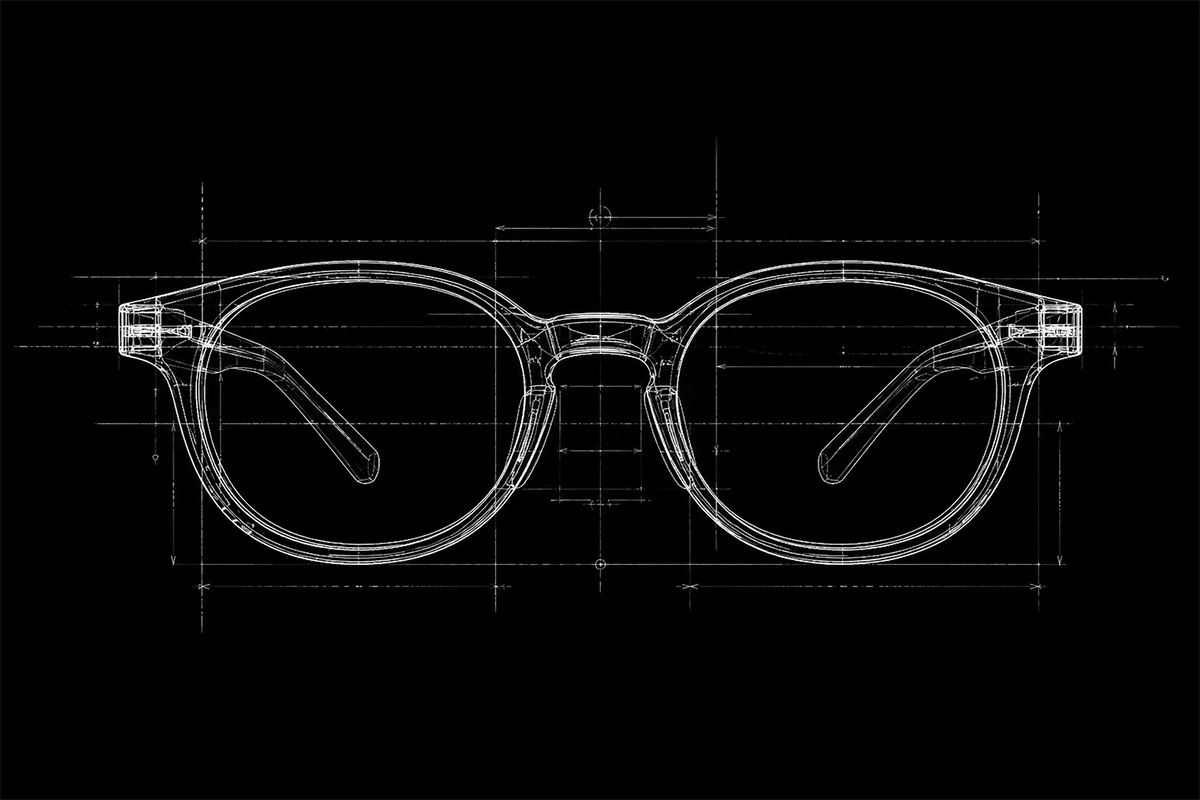

Structural Logic, Material Behavior, and the Engineering of Presence by Zblack Eyewear
Abstract
ontemporary eyewear engineering has evolved beyond conventional product design into a multidisciplinary synthesis of material science, structural mechanics, and perceptual aesthetics. Although any comprehensive eyewear buying guide highlights factors such as comfort, fit, and lens selection, the choice of frame material is equally critical because it determines long-term durability, structural performance, and user experience. In high-end frame construction, materials are no longer selected solely for utility or ornamentation; they function as active structural languages that define geometry, tactile experience, and visual identity simultaneously.
This paper examines the mechanical and perceptual characteristics of six advanced material systems widely used in luxury and performance eyewear: cellulose acetate, titanium, aluminum, TR-90 thermoplastic polyamides, polyetherimide (Ultem), and stainless steel. Beyond technical evaluation, the study proposes a broader material philosophy in which engineering precision and sensory restraint converge to construct objects of enduring presence rather than temporary stylistic relevance.
- Introduction
Eyewear has transformed from a purely corrective optical instrument into a refined micro-architectural object positioned at the intersection of engineering, industrial design, and cultural expression. Within contemporary design frameworks particularly in high-end European manufacturing traditions the frame is no longer understood as a decorative shell surrounding lenses, but as an integrated structural system governed by stress behavior, material hierarchy, and controlled interaction with the human body.
In this context, materials cannot be treated as interchangeable industrial components. Each material possesses its own behavioral logic, resistance profile, thermal response, and perceptual character. The engineering process therefore becomes less about styling and more about orchestrating the intrinsic intelligence of matter itself.
A luxury frame is not defined by visual excess, but by the precision with which unnecessary elements are removed while structural coherence remains intact.
- Material Systems as Structural Languages
2.1 Cellulose Acetate: Volumetric Depth and Material Memory
Cellulose acetate occupies a unique position in luxury eyewear due to its hybrid identity as both a bio-derived polymer and a semi-artisanal structural medium. Unlike injection-molded plastics characterized by homogenous internal composition, acetate is produced through layered sheet lamination, compression, and controlled aging processes that generate subtle density variation throughout the material body.
This internal stratification creates optical depth that cannot be replicated through superficial coating techniques. Pigmentation exists volumetrically within the acetate structure itself, allowing light to penetrate and diffuse through multiple internal layers rather than reflecting directly from the surface. The result is a form of internal luminance that gives acetate its characteristic visual gravity.
Mechanically, acetate demonstrates predictable viscoelastic behavior. During manufacturing, the material responds to thermal deformation with controlled plasticity, enabling precise shaping and hand-finishing. Once annealed and stabilized, however, it retains post-form rigidity with notable dimensional consistency.
For this reason, acetate is valued not as an alternative to plastic, but as a material capable of embodying depth, warmth, and material presence simultaneously.
2.2 Titanium: Invisible Structural Precision
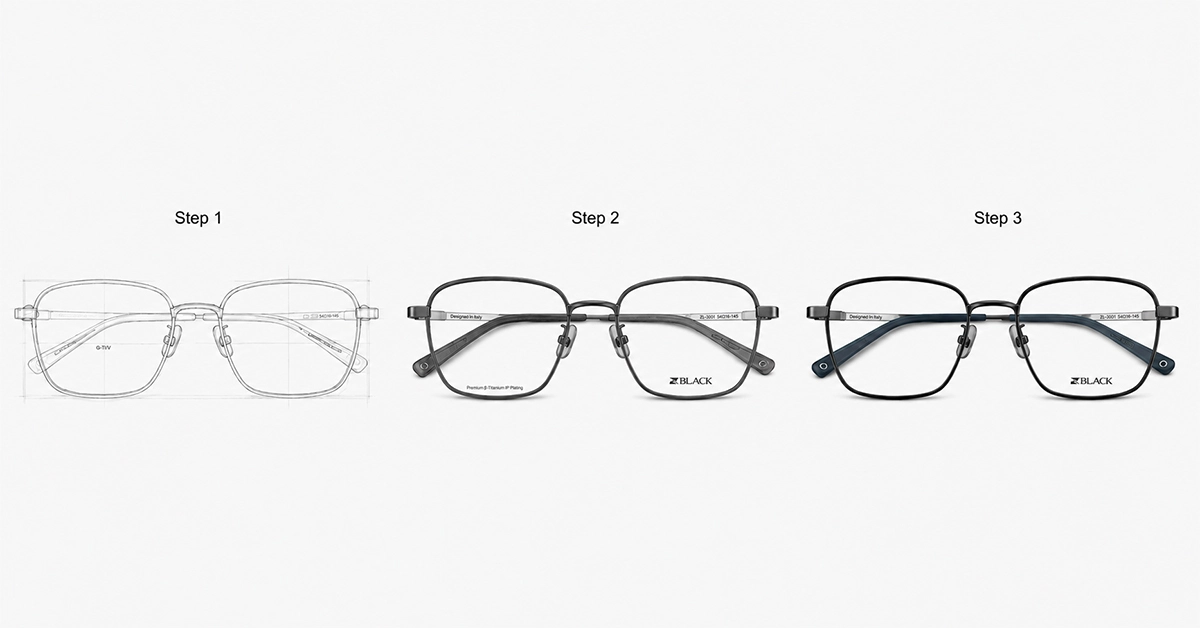
Titanium represents one of the most structurally optimized materials in modern eyewear engineering. Its significance extends beyond the conventional strength-to-weight ratio and enters the domain of molecular stability, elastic memory, and long-term corrosion immunity.
The material enables frame geometries to approach minimal structural thresholds without compromising mechanical reliability under cyclic loading conditions. This is particularly important in bridge assemblies and temple flex zones where repeated stress concentration occurs over extended periods of use.
Beta-titanium alloys introduce controlled elasticity into the frame system, allowing deformation under pressure followed by full geometric recovery without permanent structural fatigue. This memory-like behavior permits the construction of ultra-lightweight frames that maintain resilience despite reduced mass and cross-sectional volume.
Surface engineering of titanium presents additional technical complexity. Due to the material’s naturally forming oxide layer, conventional coating systems exhibit poor adhesion. As a result, advanced ion deposition methods and anodic coloration techniques are required to integrate aesthetic treatments without weakening structural integrity.
Within luxury eyewear, titanium often functions less as a visible material and more as an invisible architectural logic that defines restraint, precision, and engineered permanence.
2.3 Aluminum: Machined Minimalism
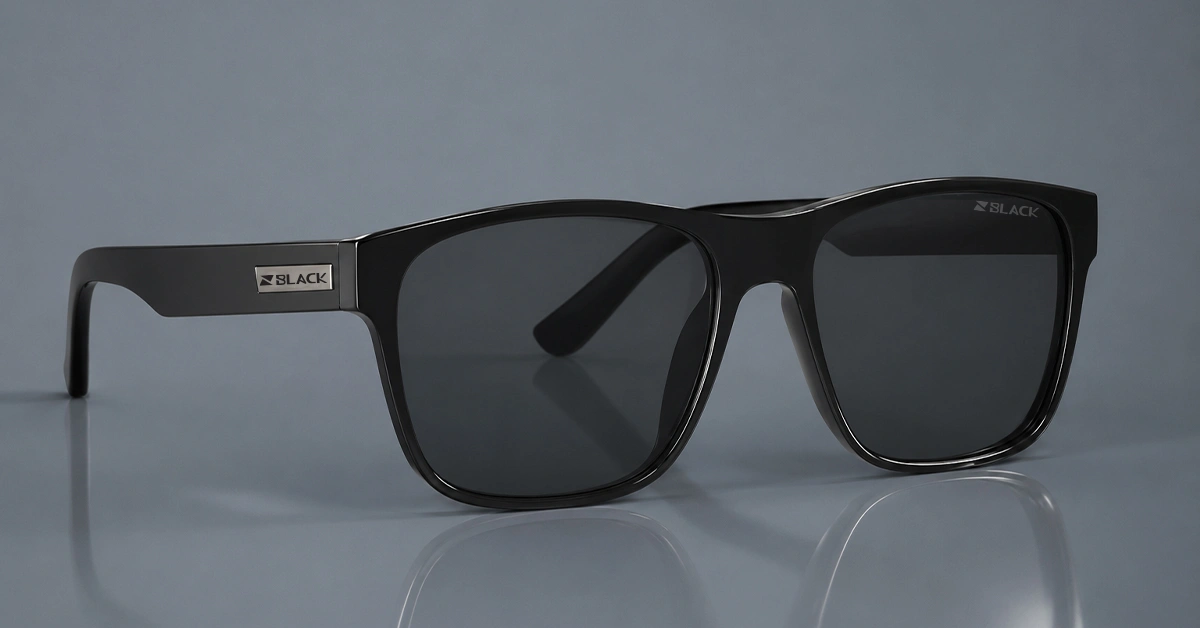
Aluminum serves a fundamentally different role from titanium within advanced frame systems. Rather than prioritizing elastic endurance, aluminum excels as a lightweight material optimized for high-precision machining and geometric freedom.
Its crystalline structure allows rapid CNC processing and highly controlled micro-machining operations, enabling complex forms that would be economically or mechanically impractical in denser metals. Through anodization, aluminum develops a stabilized oxide surface that improves corrosion resistance while simultaneously enabling controlled optical absorption and color integration.
However, aluminum exhibits comparatively lower fatigue resistance under repetitive stress cycles. Consequently, frame architectures utilizing aluminum frequently incorporate reinforcement zones, hybrid material junctions, or supplementary structural components in high-load regions.
In premium eyewear applications, aluminum often acts as a transitional engineering material bridging visual minimalism with manufacturing efficiency rather than functioning as the primary load-bearing backbone of the frame.
2.4 TR-90: Functional Elasticity and Impact Dispersion
TR-90 and related thermoplastic polyamide systems belong to a category of engineered polymers specifically optimized for deformation tolerance and impact resistance. Their semi-crystalline molecular architecture permits reversible elastic movement under mechanical stress, distributing applied energy through molecular chain realignment rather than concentrated fracture zones.
Unlike rigid thermoset materials, TR systems operate within a flexible entropy-driven structural regime. This enables exceptional resilience in dynamic environments where sudden force application or repeated deformation occurs.
The material also demonstrates notable thermal stability across varying environmental conditions, reducing the likelihood of warping or geometric drift caused by temperature fluctuation.
Despite these advantages, TR materials generally lack the tactile density and micro-structural richness associated with luxury-oriented frame systems. Consequently, their application remains primarily performance-driven unless combined with advanced surface treatments capable of simulating greater perceptual depth.
TR-90 is therefore best understood not as a material of heritage or permanence, but as a material of engineered resilience.
2.5 Ultem (Polyetherimide): Thermal Stability and Dimensional Integrity
Ultem, or polyetherimide (PEI), occupies a specialized position among high-performance polymers due to its exceptional thermal resistance, tensile stability, and low creep behavior under sustained stress exposure.
Its amorphous molecular structure produces a natural translucency accompanied by a warm amber coloration intrinsic to the polymer itself rather than added pigmentation. This optical neutrality contributes to its adoption in technical eyewear systems where material authenticity is prioritized over decorative treatment.
From an engineering perspective, Ultem maintains dimensional accuracy at temperatures significantly higher than those tolerated by conventional thermoplastics. This stability is critical in applications where environmental heat exposure could compromise frame geometry over time.
Although highly functional, Ultem remains fundamentally performance-oriented. Its value derives from predictability, consistency, and structural reliability rather than artisanal richness or sensory complexity.
2.6 Stainless Steel: Structural Discipline and Industrial Precision
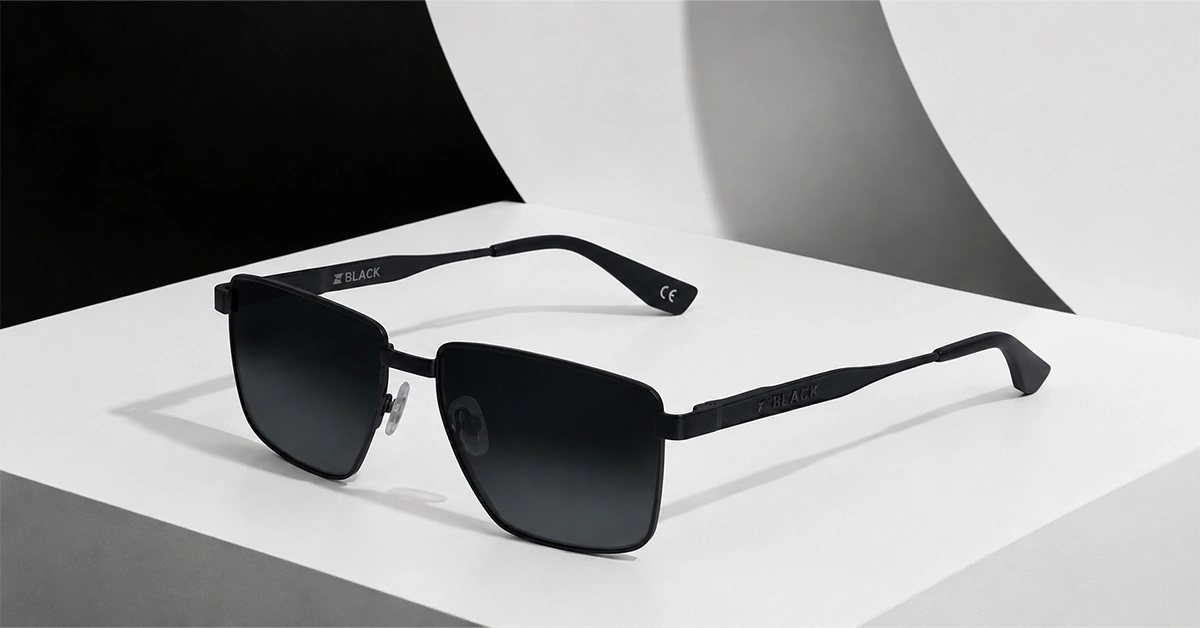
Stainless steel is defined by its balance between rigidity and corrosion resistance achieved through chromium-rich alloy stabilization. In eyewear construction, its role is fundamentally architectural: providing stable geometric definition with industrial consistency.
Its relatively high modulus of elasticity allows the creation of thin yet mechanically stable frame structures, particularly suited to minimalist visual systems. Precision manufacturing methods, including laser micro-cutting, photo-etching, and advanced welding processes enable extremely tight tolerances and repeatable structural accuracy.
However, stainless steel’s rigidity limits its capacity for dynamic deformation absorption. Comfort optimization must therefore emerge through ergonomic geometry rather than material flexibility.
In advanced eyewear engineering, stainless steel represents structural discipline: precise, controlled, and mechanically uncompromising.
- Material Orchestration and Hybrid Engineering
Modern eyewear no longer relies on isolated material selection but on coordinated material orchestration. Structural identity emerges through the interaction of multiple systems operating simultaneously across different scales and functions.
Acetate contributes volumetric depth and sensory warmth. Titanium introduces elastic stability with minimal mass. Aluminum enables machinable geometric precision, while TR-90 disperses impact energy through molecular flexibility. Ultem ensures thermal and dimensional consistency, and stainless steel provides architectural rigidity.
The contemporary frame therefore becomes less a singular object and more a negotiated equilibrium between competing material behaviors.
This convergence reflects a broader shift within luxury engineering from visible decoration toward invisible structural intelligence.
- Surface Engineering and Perceptual Behavior
Surface treatment in advanced eyewear extends beyond protective finishing and enters the domain of perceptual engineering. Materials are interpreted visually before their structural logic is consciously understood, making surface behavior inseparable from identity formation.
Acetate manipulates light volumetrically through internal diffusion. Titanium depends on oxide-layer modulation and ion deposition processes. Aluminum relies on anodized stabilization for controlled chromatic absorption. Ultem introduces translucency inherent to molecular composition, while stainless steel utilizes micro-polishing to regulate reflectivity and optical sharpness.
These treatments are not cosmetic additions; they are engineered interfaces between matter and perception.
- On the Engineering of Presence
High-end eyewear is not designed merely to attract attention. It is constructed to communicate material coherence through restraint.
Every frame begins not with external form, but with a deeper question: what happens when a material is allowed to express its own structural logic rather than imitate another?
Materials possess behavioral identities. Acetate retains memory of heat. Titanium resists environmental decay. Aluminum yields to precision machining. TR-90 absorbs force without permanent deformation. Ultem preserves geometry under thermal stress. Stainless steel prioritizes structure before softness.
They are not selected for what they appear to be, but for what they refuse to compromise.
Luxury, within this framework, is not excess or ornamentation. It is the reduction of an object to the point where nothing further can be removed without weakening intention.
Mass production often dissolves meaning through repetition. Precision, by contrast, preserves coherence.
The ultimate objective is therefore not style, but presence: the stabilization of material truth into a lasting physical experience.
- Conclusion
Contemporary eyewear engineering represents a convergence of mechanical performance, material science, and perceptual philosophy. Materials are no longer passive carriers of form but active systems that shape structural behavior, sensory interaction, and cultural meaning simultaneously.
Future developments will likely move toward increasingly adaptive hybrid systems in which distinctions between functional engineering and aesthetic expression become progressively inseparable. In such systems, the value of an object will no longer derive from singular materials alone, but from the precision with which different material intelligences are integrated into a coherent structural language.
Ultimately, advanced eyewear is not defined by decoration or trend. It is defined by the disciplined orchestration of matter into enduring presence.