







Understanding Eyeglass Lens Thickness
When choosing prescription glasses, most people focus on frame style, color, or material. However, lens thickness is just as important, especially for individuals with myopia. Thick lenses can make glasses feel heavier, reduce comfort during long hours of wear, and even affect the overall appearance of the frame. For this reason, many eyewear users prefer lenses that are thinner, lighter, and more visually balanced.
While modern optical technology has significantly improved lens design, several important factors still influence how thick a pair of lenses will ultimately be.Understanding these details can help you make better choices when selecting both frames and lenses, making it easier to find the best wholesale optical frames for a comfortable fit and an attractive overall look.

1. Frame Size Plays a Major Role
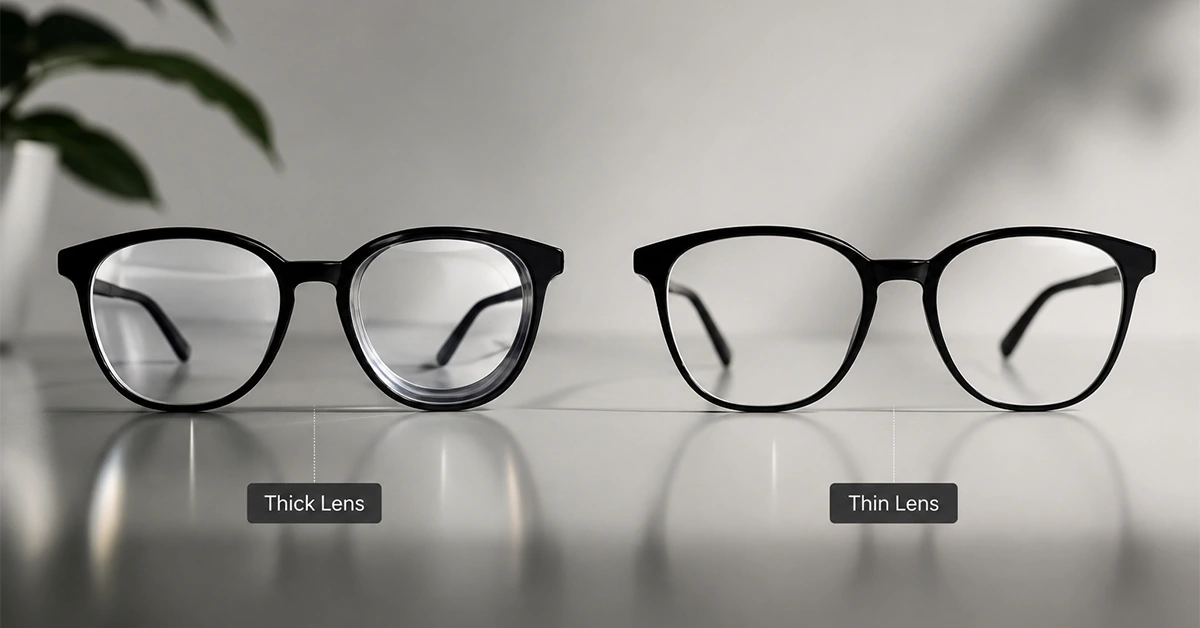
One of the biggest factors affecting lens thickness is the size of the eyeglass frame. Larger frames usually require larger lenses, and larger lenses naturally create thicker outer edges in myopic prescriptions.
The relationship between the wearer’s interpupillary distance (PD) and the frame’s optical center is especially important. If the frame width does not closely match the wearer’s PD, the lenses must be decentered during production. The greater this shift becomes, the thicker the lens edges will appear.
For example, someone with a smaller PD using an oversized frame will often end up with noticeably thicker lenses compared to someone whose PD closely matches the frame dimensions. In general, smaller and more proportionate frames help reduce unnecessary edge thickness and create a lighter overall appearance.
-
Prescription Strength Directly Affects Thickness
The strength of the prescription is another major factor. In simple terms, the higher the level of myopia, the thicker the lens edges become. Stronger prescriptions require more optical correction, which increases lens curvature and edge volume.
This is why people with high prescriptions often notice heavier glasses or thicker side profiles, especially when standard lens materials are used. Lower prescriptions usually allow for slimmer and lighter lens designs, while stronger prescriptions often benefit from advanced high-index materials to reduce bulk.
-
Refractive Index Changes Lens Thickness
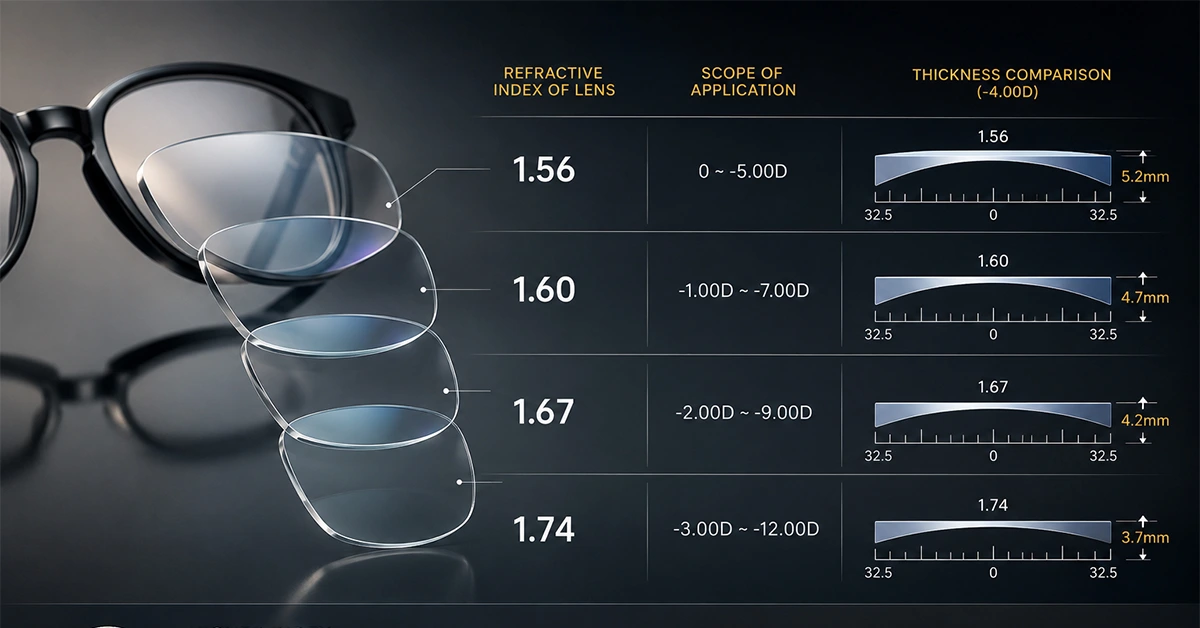
Lens material technology has a major influence on how thin lenses can be manufactured. Refractive index refers to how efficiently a lens material bends light. Higher-index lenses can provide the same prescription strength using less material, resulting in a thinner lens profile.
Common refractive indexes include 1.56, 1.60, 1.67, and 1.74. As the index number increases, the lens becomes thinner and lighter for the same prescription power. However, higher-index lenses are usually more expensive because they involve more advanced materials and manufacturing processes.
For people with medium or high prescriptions, choosing a higher refractive index can dramatically improve both comfort and appearance by reducing edge thickness and lens weight.
Factor 4: Frame Material
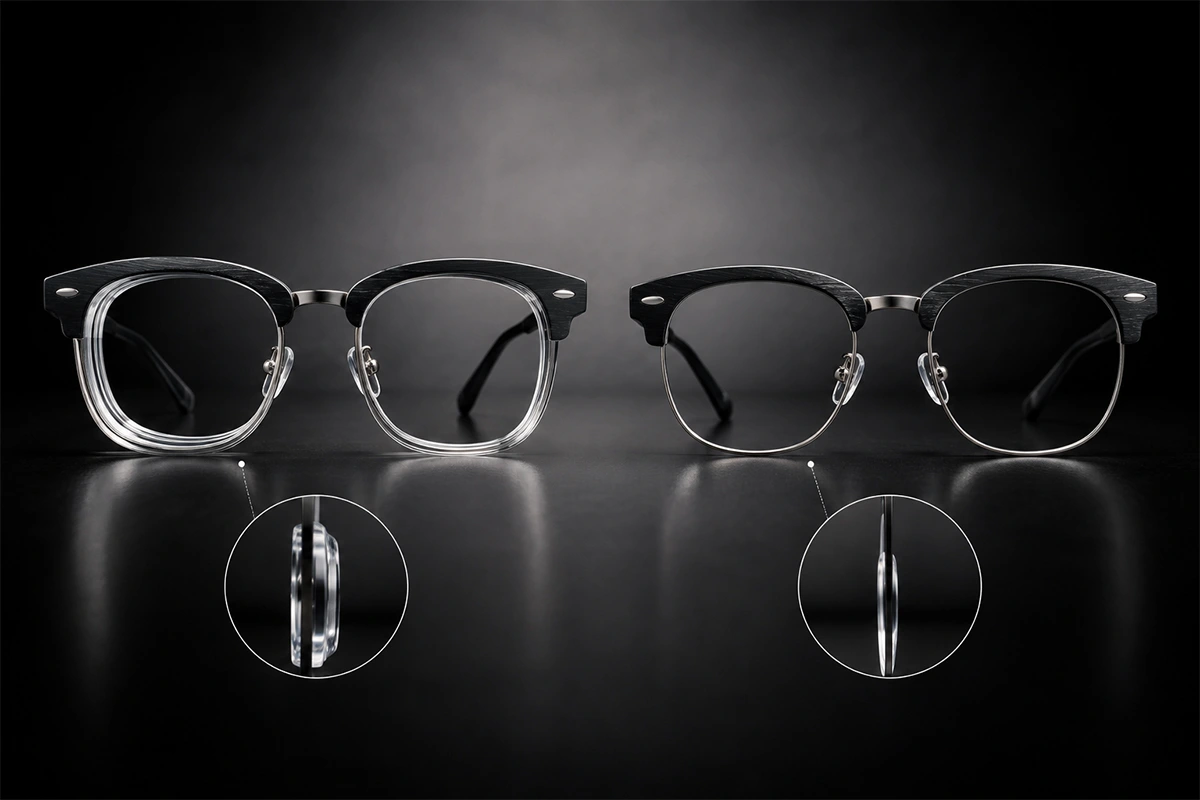
The material used for the eyeglass frame is also an important factor that affects the overall appearance and perception of lens thickness. Acetate frames are usually thicker and heavier, while metal frames tend to appear thinner and lighter. Titanium eyewear, in particular, is highly valued because titanium is both extremely strong and lightweight, allowing manufacturers to create very slim yet durable frame structures.
However, when selecting frames and lenses together, it is important not to focus only on the frame material itself. The frame style should also match the thickness of the lenses.
For instance, if someone has a high prescription requiring relatively thick lenses, pairing those lenses with an ultra-thin frame may create an unbalanced and visually awkward appearance. Choosing a frame that properly complements the lens thickness will result in a more harmonious overall look.
4. Frame Material Influences Overall Appearance
The frame itself also affects how thick lenses look after assembly. Acetate frames are generally bolder, thicker, and heavier, while metal frames often create a slimmer and more lightweight visual effect. Titanium frames, in particular, are highly popular because they combine durability with extremely lightweight construction.
However, selecting the right frame is not only about material. The frame style should visually balance the lens thickness. For example, pairing very thick lenses with an ultra-thin metal frame may expose the lens edges too much, creating an unbalanced appearance. In many cases, slightly thicker frame designs can help conceal lens thickness more effectively and improve the final aesthetic result.
5. Lens Shape Can Change Visual Thickness
Lens shape also influences how thick glasses appear. Rounded frames often make lenses look thinner because the lens edges remain more evenly distributed around the frame.
Square or rectangular frames, especially oversized ones, tend to expose thicker outer corners where lens thickness is usually greatest.
Although shape alone will not completely change lens thickness, it can significantly affect visual perception. This is why round or oval frames are commonly recommended for people with stronger prescriptions who want a cleaner and lighter appearance.
6. Larger Lenses Usually Mean Thicker Edges
Even if two frames have the same bridge size and similar proportions, the overall lens dimensions still matter. Larger lenses require more material, especially around the edges of myopic lenses where thickness naturally increases.
Smaller lens designs reduce the amount of outer lens area, helping minimize visible thickness and overall weight. Oversized fashion frames may look stylish, but for strong prescriptions they often create thicker and heavier lenses. Choosing a more compact frame design is usually one of the easiest ways to achieve a thinner lens profile.
Additional Techniques for Reducing Lens Thickness Appearance
In addition to selecting the right frame and lens material, optical labs can also apply certain finishing techniques to improve the appearance of thick lenses. One common method involves modifying the edge shape of the lens during processing. By slightly angling or tapering the lens edge, the final result can appear slimmer from the side view.
However, excessive edge thinning may expose brighter reflections or visible whitening along the lens edge when viewed from the front. Because of this, optical technicians usually try to balance aesthetics, durability, and optical performance when applying these finishing methods.
Final Thoughts
Lens thickness is influenced by a combination of factors rather than a single element. Frame size, prescription strength, refractive index, frame material, lens shape, and lens dimensions all work together to determine how thick or thin a pair of glasses will appear.
By understanding these factors, consumers can make smarter eyewear choices that improve both comfort and appearance. Whether you are selecting lightweight titanium frames, high-index lenses, or smaller frame shapes, the right combination can create glasses that feel lighter, look more refined, and provide a much better everyday wearing experience.