





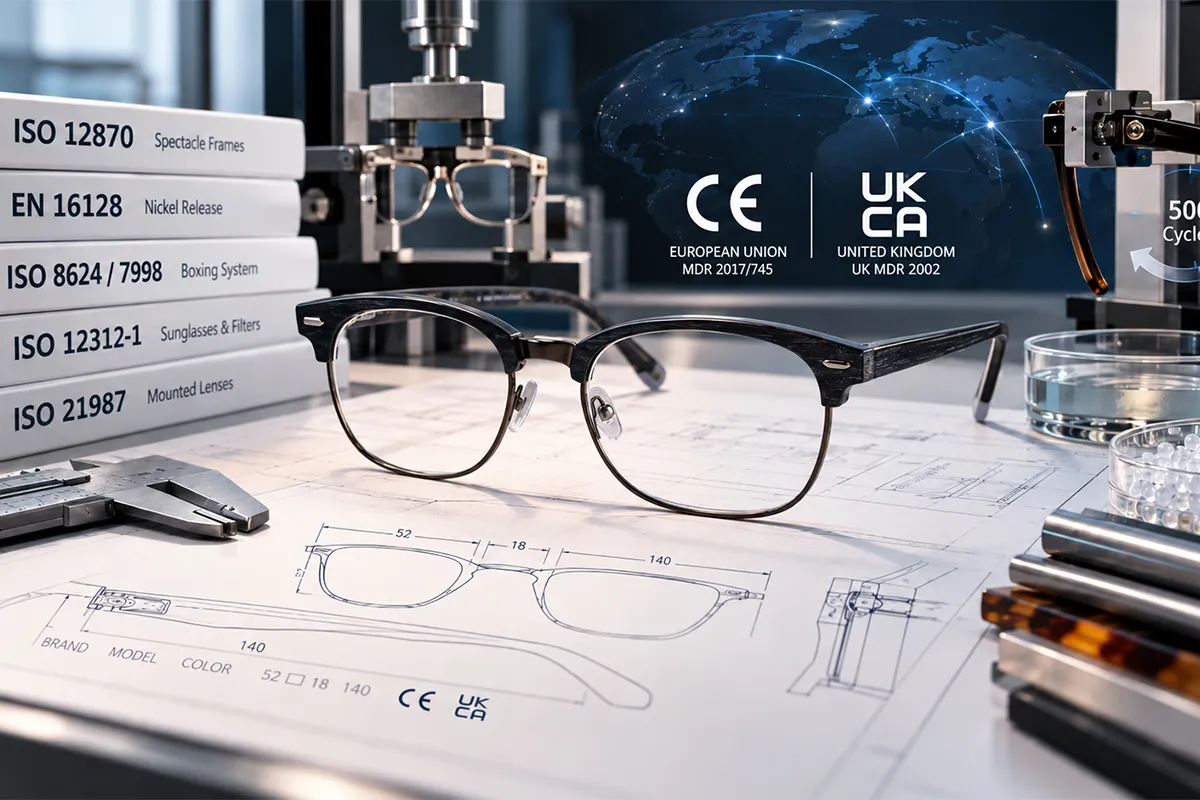
International Eyewear Standards, The ISO 12870 Framework & Regulatory Compliance (CE & UKCA)

Comprehensive Engineering, Mechanical & Regulatory Monograph: A Complete Technical Guide to ISO 12870, EN 16128, ISO 8624, ISO 12312-1, and Conformity Workflows
1. Scope, Classification & Regulatory Framework (ISO 12870 & MDR)
Standard Definition & Legal Standing: ISO 12870 (harmonized as EN ISO 12870 across the European Union) specifies the fundamental technical, mechanical, optical compatibility, and biocompatibility requirements for unglazed spectacle frames intended for mounting corrective ophthalmic lenses. For optical retailers and distributors seeking the best wholesale optical frames, understanding these requirements is essential for evaluating product quality and supplier compliance. Under the European Medical Device Regulation (EU MDR 2017/745), ophthalmic prescription frames are classified as Class I Medical Devices. This regulatory classification imposes strict legal obligations on manufacturers, brand owners, and importers to establish full Technical Documentation (Technical Files), declare conformity with harmonized standards, apply the CE marking, and maintain active post-market surveillance systems.
CE & UKCA Regulatory Conformity Assessment:
- European Union (CE Marking): Prescription frames are classified as Class I Medical Devices under EU MDR 2017/745, requiring full Technical Files, compliance with EN ISO 12870 & EN 16128, an EU Declaration of Conformity (DoC), and CE marking. Plano sunglasses are categorized as PPE Category I under Regulation (EU) 2016/425, requiring compliance with EN ISO 12312-1.
- United Kingdom (UKCA Marking): In Great Britain (England, Scotland, Wales), prescription frames must comply with UK MDR 2002 and designated standard BS EN ISO 12870, requiring an appointed UK Responsible Person (UKRP) and UK DoC. Plano sunglasses are governed under the Retained PPE Regulation 2016/425 and BS EN ISO 12312-1.
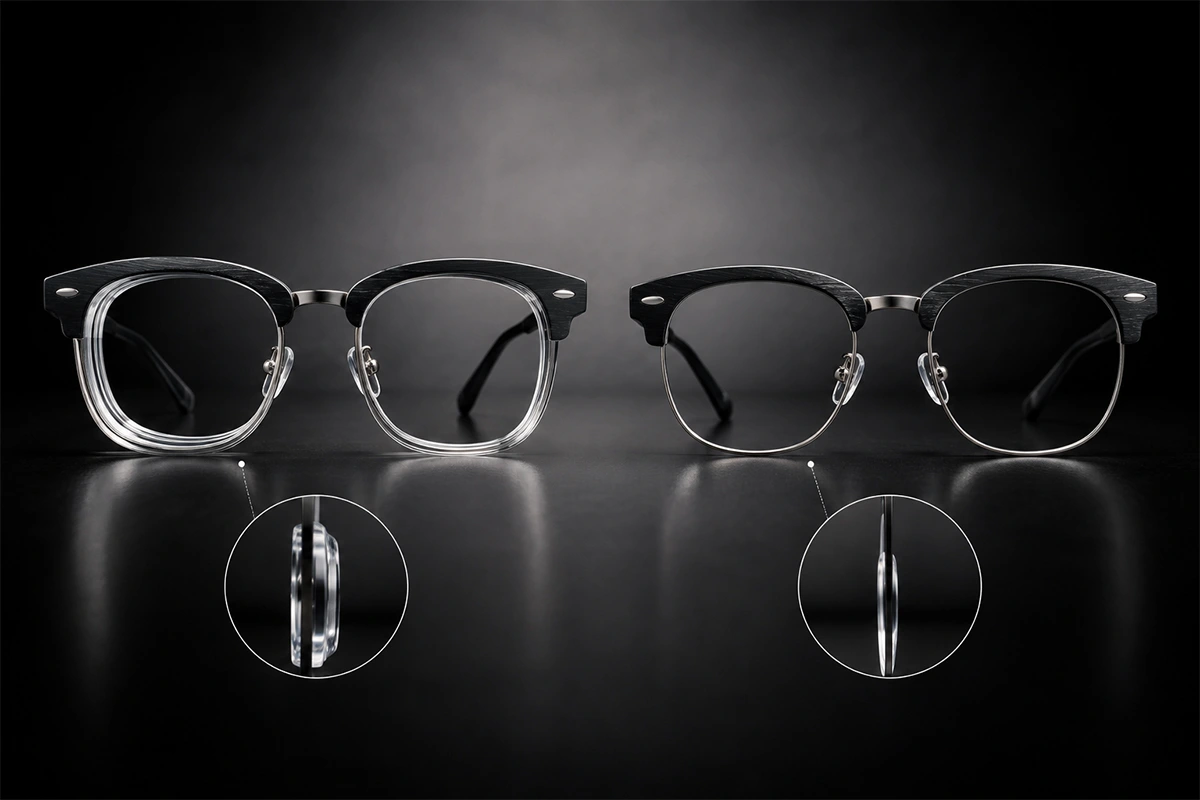
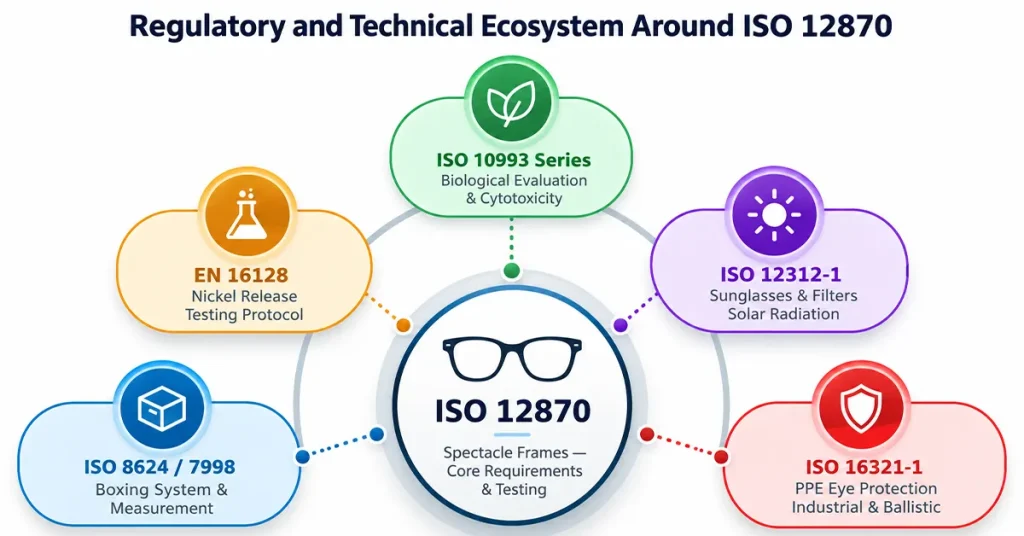
Applicable Frame Types: The standard covers all styles and configurations of spectacle frames: full-rim frames (metal, plastic, and combination), rimless designs (three-piece drill mount), semi-rimless constructions (nylon thread / supra systems), folding frames, and half-eye reading frames. It expressly excludes custom-made frames fabricated for a single specific patient (unless conforming to general safety principles) and protective industrial eyewear, which are governed separately by personal protective equipment (PPE) regulations such as ISO 16321.
Figure 1: Regulatory and Technical Ecosystem Surrounding ISO 12870 for Spectacle Frames
2. Material Safety, Cytotoxicity & Nickel Release (EN 16128 Integration)
Biocompatibility & Dermal Safety: Spectacle frames remain in prolonged, intimate contact with the human epidermis at three sensitive anatomical locations: the nasal bridge, the temple shafts against the temporal bone, and the mastoid process behind the ears. ISO 12870 mandates that frame materials comply with the biological safety principles of ISO 10993-1. Materials must be verified for zero cytotoxicity (ISO 10993-5), absent dermal irritation (ISO 10993-10), and zero delayed-type hypersensitivity. Polymeric materials such as cellulose acetate (CA), cellulose propionate (CP), polyamide 12 (TR-90 / Grilamid), and polyetherimide (Ultem / PEI) must be formulated without toxic ortho-phthalate plasticizers (DEHP, DBP, BBP) or migrating organic solvents.
Nickel Release Testing Protocol (EN 16128): Nickel contact allergy is the leading cause of allergic contact dermatitis in the eyewear industry. All metallic frame components intended to come into direct and prolonged contact with human skin must comply with EN 16128 (Reference test method for release of nickel from spectacle frames):
- Threshold Limit: The maximum allowable nickel release rate is 0.5 ug/cm2/week.
• Accelerated Simulated Wear: Before electrochemical extraction, frame parts treated with organic protective lacquers or electroplated barrier coats must undergo a rigorous simulated wear regimen representing two years of daily consumer usage. This involves mechanical tumbling in specialized abrasive granules and intermittent chemical exposure.
• Artificial Sweat Extraction: Components are subsequently immersed in an artificial sweat solution (pH 6.5 +- 0.1, comprising sodium chloride, lactic acid, and urea) at 30 +- 1 deg C for 168 hours (7 days). The resulting leachate is analyzed via Inductively Coupled Plasma Mass Spectrometry (ICP-MS) or Atomic Absorption Spectrometry (AAS).
3. Mechanical Testing & Structural Endurance Protocols
To ensure that spectacle frames can withstand daily consumer handling and mechanical stresses, ISO 12870 establishes standardized physical testing protocols:
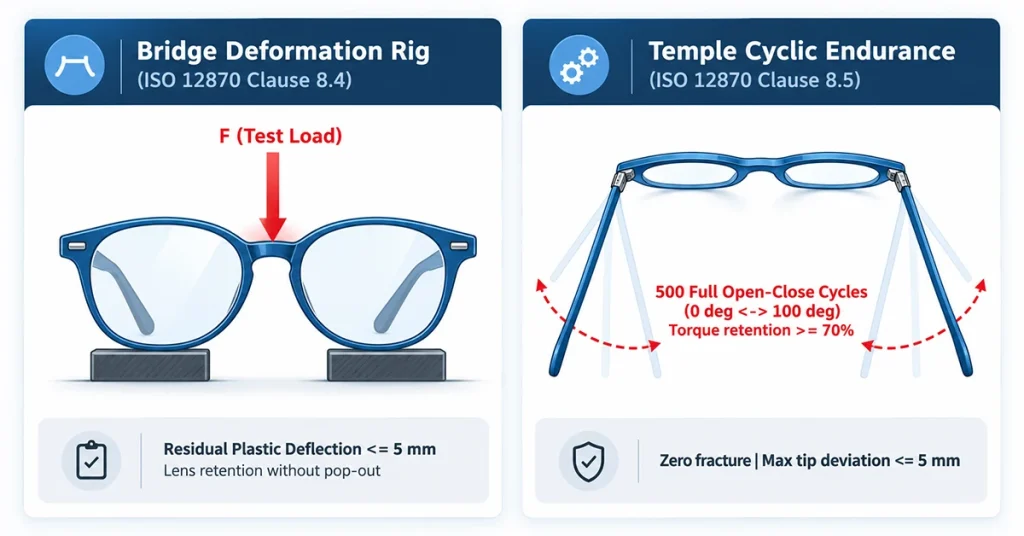
- Bridge Deformation & Lens Retention Test: This test evaluates the mechanical rigidity of the bridge and the retention capacity of the lens rims under external bending loads. The frame front is securely mounted in a specialized holding fixture with demonstration lenses fitted into the bevel grooves. A mechanical probe applies a specified displacement or load to the center of the nasal bridge. Criteria for passing include:
1. The residual permanent deformation of the bridge after releasing the load must not exceed 5 mm or 1.5% of the distance between lens centers.
2. Both lenses or demo blanks must remain firmly seated within the rim bevel grooves without dislodging, cracking, or popping out. - Temple Endurance & Hinge Cycling Test: Eyewear temples and hinge assemblies are subjected to continuous cyclic open-and-close articulation in an automated mechanical test rig:
1. Cycle Count: Minimum 500 complete open-and-close cycles per temple.
2. Articulation Arc: From fully closed position (temple folded against eyewire) to nominal wearing position (90 to 105 degrees).
3. Evaluation Criteria: Zero mechanical fracture or shearing of hinge screws, joints, or spring-hinge inner mechanisms. Friction torque retention must be at least 70% of initial baseline value, with zero excessive lateral wobble or permanent tip spreading exceeding 5 mm.
Figure 2: Schematic Configuration of Bridge Deformation Rig and Temple Cyclic Endurance Test Apparatus
4. Environmental, Chemical & Thermal Degradation Resistance
Artificial Perspiration Resistance: Frames are placed in a climatic chamber and exposed to an analytical artificial sweat solution formulated with L-histidine monohydrochloride monohydrate, sodium chloride, and disodium hydrogen phosphate (calibrated to pH 5.5 +- 0.2). Frames are maintained at 40 +- 2 deg C for 24 hours under vapor immersion. Compliance requires:
• Zero peeling, blistering, or flaking of electroplating layers (IP Gold, Gunmetal, Chrome) or protective clear lacquers.
• Zero development of green corrosion products (verdigris) on copper/nickel base alloys.
• Zero discoloration, clouding, or surface whitening on cellulose acetate components.
• Zero adhesive failure of laminated multi-layer acetate sheets or glued metal badges.
Thermal Stability & Dimensional Integrity: Polymer frames are susceptible to internal residual stress relaxation. Glazed frames are placed in an oven at 55 +- 2 deg C for 90 minutes. After room-temperature cooling, the frame must maintain structural symmetry: no warpage, no lens looseness, and the distance between temple tips must not deviate by more than +- 5 mm from pre-test measurements.
Ignition & Flammability Resistance: To eliminate dangerous flammable materials such as cellulose nitrate (celluloid), a heated steel cylinder (diameter 6 mm) heated to 650 +- 20 deg C is pressed against the frame material for 5.0 seconds. The material must not self-ignite or sustain combustion after the heating element is removed.
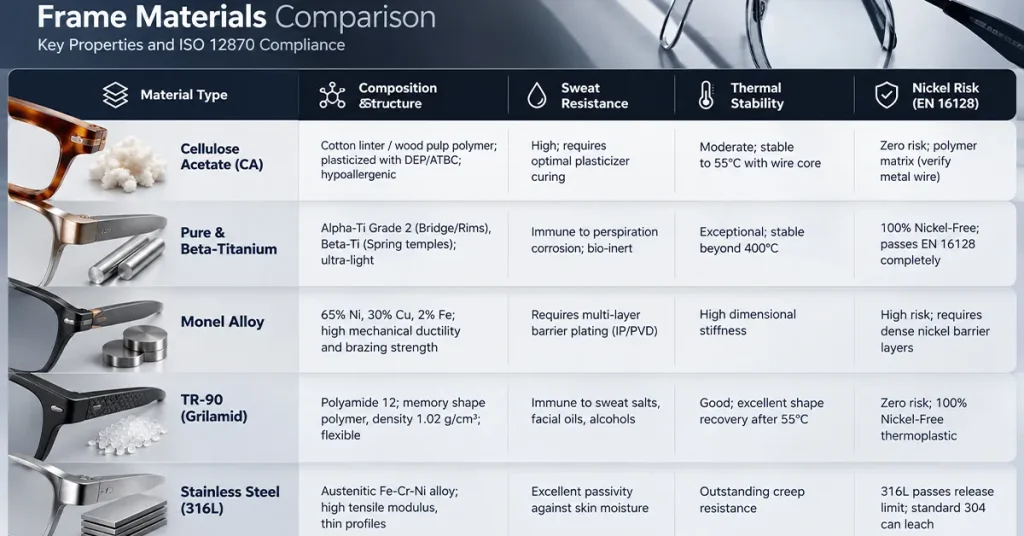
5. Material Comparison Matrix for Optical Frames
The table below summarizes the key engineering attributes of common frame materials against ISO 12870 requirements:
6. Boxing Measurement System & Mandatory Marking (ISO 8624 / 7998)
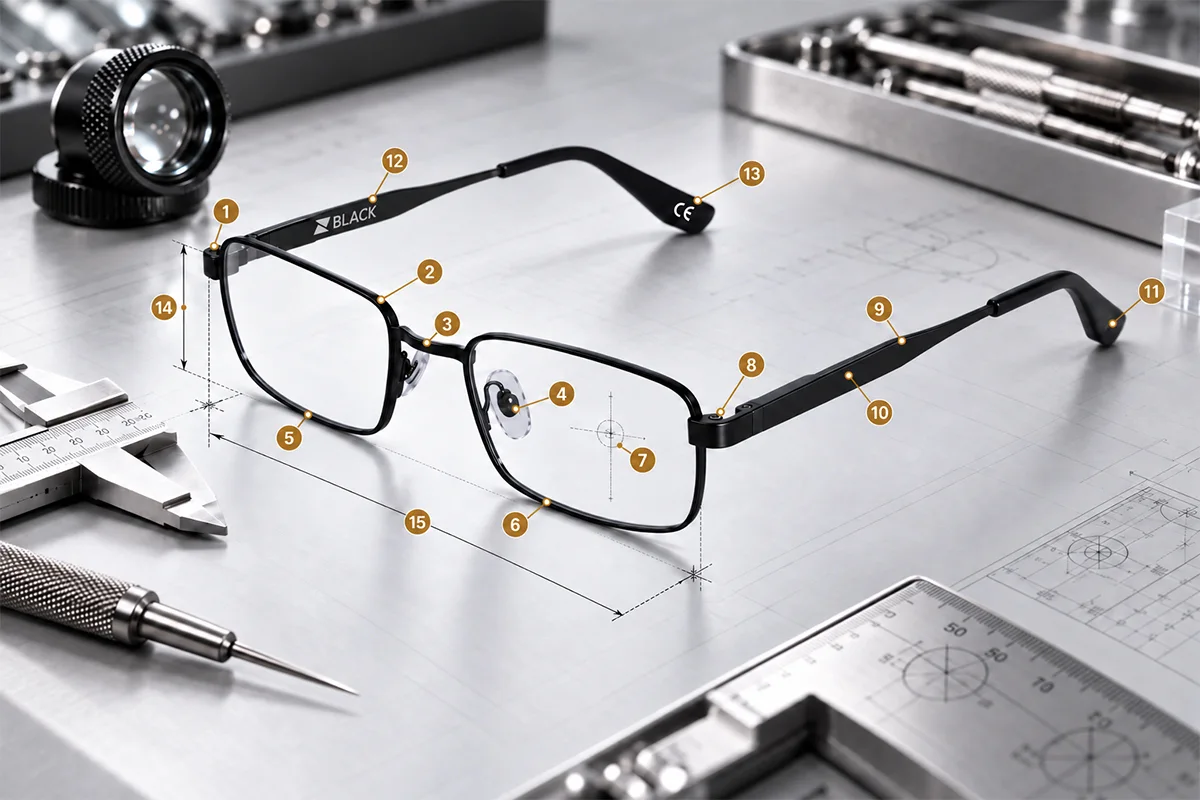
Boxing System Geometry: ISO 12870 adopts ISO 8624 and ISO 7998 as the exclusive standard for dimensioning optical frames. The Boxing System circumscribes the lens outline within a geometric rectangle formed by horizontal and vertical tangents. Key dimensions include:
• Horizontal Lens Size (A): Width of the boxing rectangle enclosing the lens bevel (e.g., 52 mm).
• Distance Between Lenses (DBL / B): Minimum horizontal separation between nasal bevel edges, symbolized by a square box (e.g., 52 [] 18).
• Temple Length: Measured along the centerline from the hinge screw axis to the tip end (e.g., 140 mm).
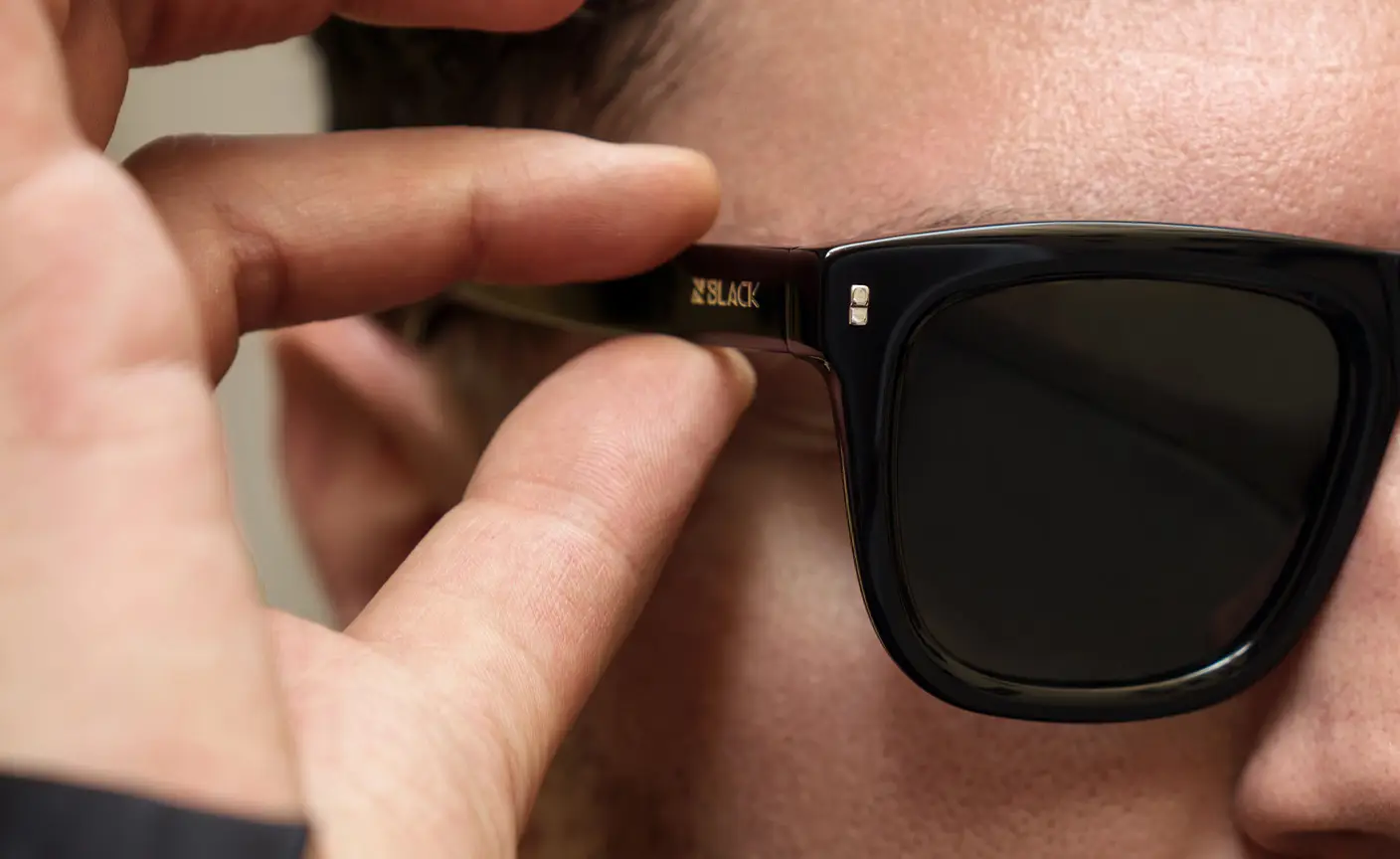
Mandatory Frame Markings: Frames must feature indelible, legible markings on the temple or bridge interior: Brand Name, Model Reference, Color Code, Boxing Dimensions (e.g., 52 [] 18 140), CE Conformity Mark, and Production Batch/Lot Identifier.
CE & UKCA Mark Dimensions: The CE and UKCA marks must have a nominal vertical height of at least 5 mm (proportional scaling permitted on narrow temple profiles).
Figure 3: Boxing Measurement System Dimensions and Standard Temple Imprint Notation
7. Interconnected Global Eyewear Standards
ISO 12870 operates in conjunction with a broad network of specialized international ophthalmic standards:
• ISO 12312-1 (Sunglasses): Defines solar luminous transmittance categories (Cat 0 to Cat 4), UV-A / UV-B solar cutoffs, traffic signal coloration, and sunglass frame robustness under intense sunlight.
• ISO 21987 (Mounted Corrective Lenses): Specifies permissible power deviations, astigmatic cylinder axis tolerances, prismatic imbalance, and optical center alignment relative to the frame boxing center.
• ISO 8980 Series (Raw Lens Blanks): Regulates optical surfaces, scratch resistance, and anti-reflective (AR) coating durability.
• ISO 16321-1 (Occupational Safety Eyewear – Replaces EN 166): Prescribes ballistic drop-ball and high-velocity impact standards for PPE goggles and frames.
• ANSI Z80.5 & ANSI Z87.1 (United States): American standards defining prescription frame criteria (Z80.5) and industrial safety impact ratings (Z87.1).
8. Factory QA/QC Inspection Protocols & Workflows
- Incoming Quality Control (IQC): Metallurgical assay of titanium wire coils, spectrometer testing of solder alloys, and moisture-equilibrium verification for cellulose acetate sheets prior to CNC routing.
2. In-Process Quality Control (IPQC): Laser weld pull-force testing, optical comparator verification of lens groove V-bevel angles (110-120 deg), XRF electroplating thickness testing (>= 2.0 um gold/palladium), and cross-hatch paint adhesion assays (ISO 2409).
3. Outgoing Quality Assurance (OQA): Destructive lot testing of 500 hinge cycles, 24-hour sweat chamber verification, and 55 deg C thermal oven testing.
9. Standards Cross-Reference Matrix & Conclusion
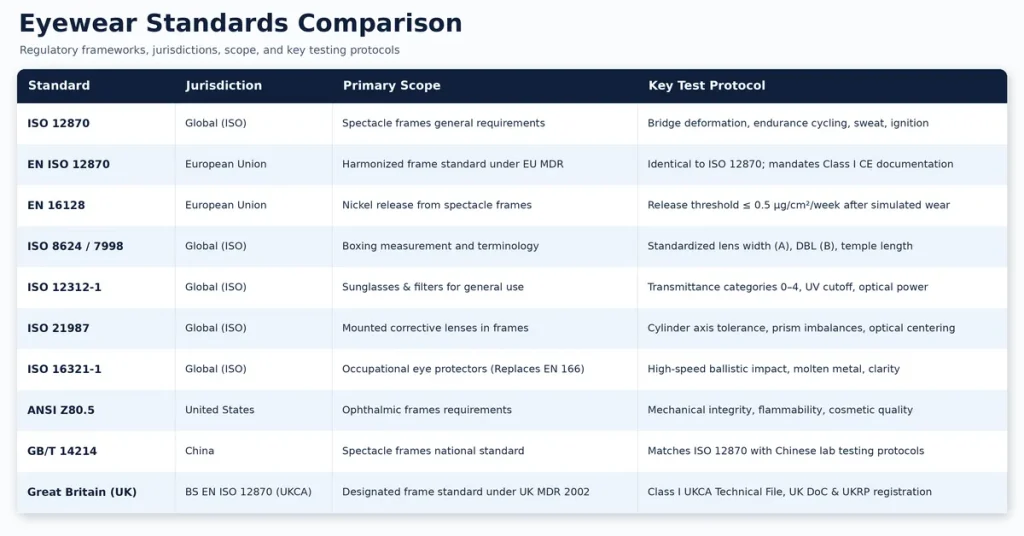
Summary: Compliance with ISO 12870, integrated with CE (EU MDR / PPE) and UKCA regulatory frameworks, forms the ultimate engineering and legal bedrock of quality assurance in modern optical manufacturing. Adhering to these harmonized standards ensures cross-border customs conformity, provides long-term structural integrity against glazing fractures, eliminates sweat galvanic corrosion, and comprehensively protects end-wearers against dermatological toxicity.